How to Build an Effective Study Routine for Students
Success in academics does not happen overnight. Behind every successful student is a consistent study routine that helps them stay focused, organized, and confident. A good study routine is not about studying for long hours every day — it is about studying smart, staying consistent, and creating habits that improve learning over time.
Many students struggle with distractions, procrastination, poor time management, and stress during studies. Without a proper routine, it becomes difficult to balance schoolwork, hobbies, rest, and personal life. The good news is that anyone can develop productive study habits with the right strategy and mindset.
At Nobel STEM School, we believe that strong routines create strong students. Our philosophy, “I CAN DO IT,” encourages students to stay motivated, disciplined, and confident in their learning journey.
In this blog, we will explore practical steps to help students build an effective study routine that improves productivity, reduces stress, and leads to better academic performance.
Why a Study Routine Is Important
A study routine helps students manage their time efficiently and stay consistent with learning. Instead of cramming before exams or studying randomly, a routine creates structure and discipline.
Benefits of a study routine include:
- Better focus and concentration
- Improved time management
- Reduced stress and anxiety
- Better memory retention
- Increased confidence
- Balanced lifestyle
- Improved academic performance
When students follow a routine regularly, studying becomes a habit rather than a burden.
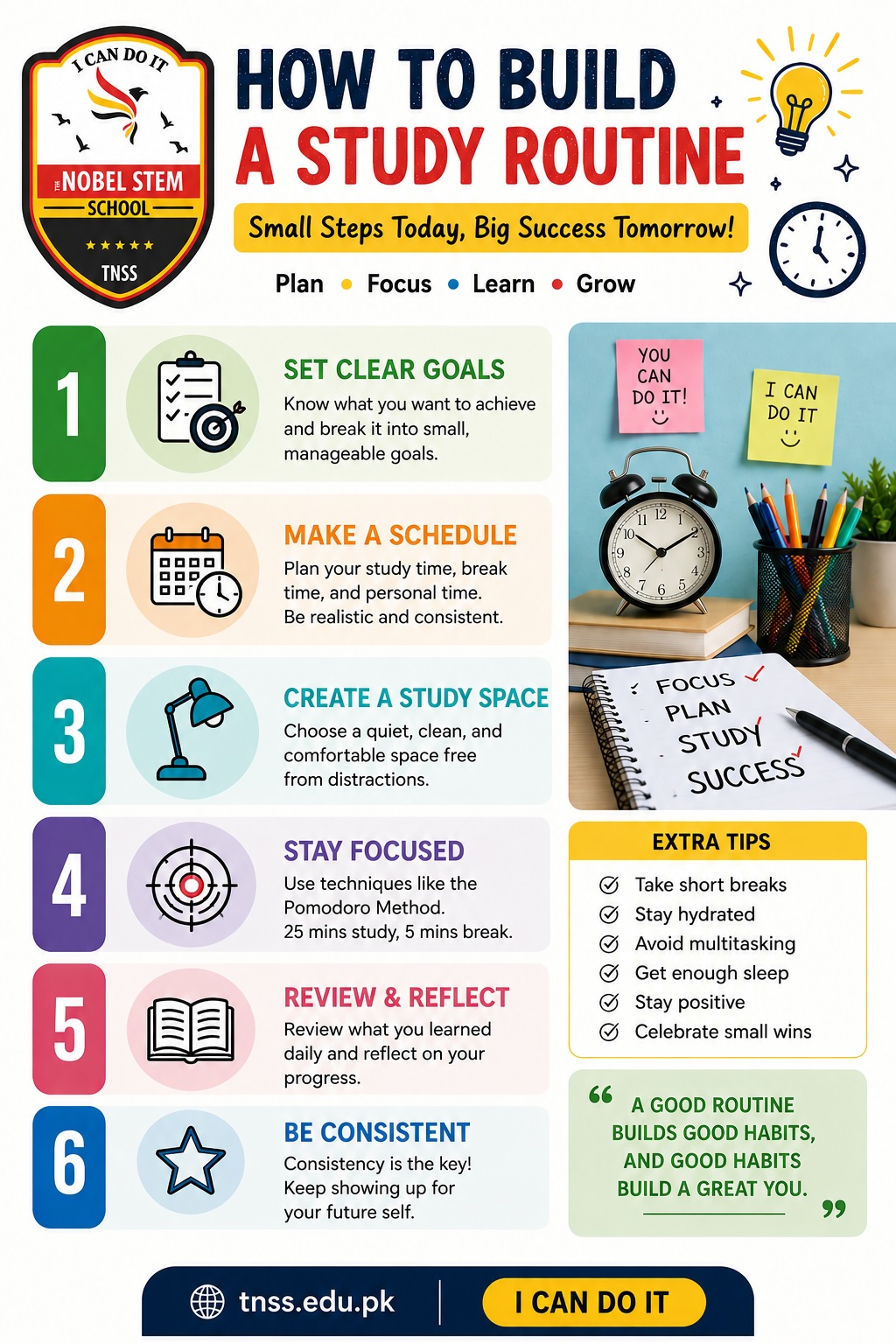
Step 1: Set Clear Academic Goals
The first step in building a study routine is understanding what you want to achieve.
Goals help students stay motivated and focused. Without clear goals, students often feel confused or lose interest quickly.
Examples of Study Goals:
- Improve grades in mathematics
- Complete homework on time
- Read for 30 minutes daily
- Prepare for upcoming exams
- Learn a new STEM skill
- Reduce distractions while studying
Goals should be realistic, specific, and achievable.
Instead of saying:
“I want to study more.”
Try saying:
“I will study science for 45 minutes every evening.”
Breaking large goals into smaller tasks makes studying easier and less overwhelming.
Step 2: Create a Study Schedule
A study schedule helps students organize their day and avoid wasting time.
One of the biggest mistakes students make is studying only when they “feel like it.” Successful students follow a consistent routine whether they feel motivated or not.
Tips for Creating a Good Schedule
Choose the Best Study Time
Some students focus better in the morning while others study better at night. Identify your most productive hours.
Balance Study and Breaks
Studying continuously for long hours can reduce concentration. Short breaks improve focus and energy.
A popular method is the Pomodoro Technique:
- Study for 25 minutes
- Take a 5-minute break
- Repeat
Include All Activities
A balanced schedule should include:
- Study time
- Homework
- Exercise
- Family time
- Sleep
- Relaxation
Be Realistic
Avoid creating impossible schedules. Start small and gradually improve consistency.
Step 3: Create a Dedicated Study Space
The environment plays a major role in concentration and productivity.
A messy or noisy area can distract students and reduce learning efficiency.
How to Create a Good Study Environment
Choose a Quiet Space
Select a calm and comfortable area with minimal distractions.
Keep Supplies Ready
Have books, notebooks, pens, chargers, and study materials nearby to avoid interruptions.
Maintain Good Lighting
A well-lit room helps reduce eye strain and keeps students alert.
Reduce Digital Distractions
Keep unnecessary devices away while studying. Social media and notifications can easily break concentration.
Keep the Space Organized
A clean study area creates a calm and productive mindset.
Students who study in a dedicated space often perform better because their brain associates that area with learning and focus.
Step 4: Stay Focused While Studying
Many students sit for hours with books open but achieve very little because they lose focus easily.
Learning how to concentrate is one of the most valuable study skills.
Ways to Improve Focus
Avoid Multitasking
Studying while using social media or watching videos reduces memory and understanding.
Focus on one task at a time.
Use Active Learning
Instead of only reading, try:
- Taking notes
- Highlighting important points
- Teaching concepts to someone else
- Solving practice questions
Set Small Targets
Completing small tasks creates motivation and momentum.
Stay Hydrated and Healthy
Proper nutrition, hydration, and sleep improve brain performance and concentration.
Step 5: Review and Reflect Daily
One of the best learning habits is reviewing what you studied each day.
Daily revision strengthens memory and helps students identify weak areas before exams.
Effective Review Methods
Summarize Key Points
Write short summaries of lessons in your own words.
Practice Questions
Testing yourself improves understanding and confidence.
Reflect on Progress
Ask yourself:
- What did I learn today?
- What was difficult?
- What can I improve tomorrow?
Self-reflection helps students become independent learners.
Step 6: Be Consistent
Consistency is the secret behind every successful study routine.
Many students start with motivation but quit after a few days. Real progress happens when students continue even on difficult days.
Small daily efforts create long-term success.
Remember:
Studying for one hour daily is better than studying ten hours once a week.
Consistency develops discipline, responsibility, and confidence over time.
Common Mistakes Students Should Avoid
Procrastination
Delaying studies increases stress and reduces performance.
Unrealistic Expectations
Trying to study for extremely long hours often leads to burnout.
Lack of Sleep
Sleep is essential for memory and concentration.
Comparing Yourself to Others
Every student learns differently. Focus on personal growth instead of competition.
Ignoring Breaks
Rest is important for maintaining focus and energy.
The Role of Parents in Building Study Habits
Parents play a major role in helping children develop healthy routines.
Here are a few ways parents can support students:
- Encourage consistency instead of perfection
- Appreciate effort and progress
- Create a supportive learning environment
- Limit distractions during study time
- Help children manage schedules
Positive encouragement builds confidence and motivation.
Study Routines and STEM Learning
STEM education requires creativity, critical thinking, and problem-solving skills. Strong study habits help students develop these abilities effectively.
At Nobel STEM School, we encourage students to become independent thinkers who can manage their time, solve problems, and approach challenges with confidence.
Good study routines prepare students not only for exams but also for future careers and lifelong learning.
Tips for Staying Motivated
Every student experiences moments of low motivation. Here are some simple ways to stay inspired:
- Celebrate small achievements
- Use motivational quotes
- Study with friends occasionally
- Reward yourself after completing tasks
- Track progress in a planner
- Remember your future goals
The key is not to be perfect — the key is to keep improving.
Final Conclusion for Building a study routine
Building a study routine takes time, patience, and consistency, but the results are worth it. A good routine helps students stay organized, focused, and confident while reducing stress and improving academic performance.
Students do not need to study all day to succeed. Simple daily habits, realistic goals, and regular practice can create powerful long-term results.
At Nobel STEM School, we believe every student has the ability to grow, learn, and achieve greatness. Through discipline, curiosity, and confidence, students can unlock their full potential.
Because success starts with one powerful belief:
“I CAN DO IT.”
Visit TNSS for more educational tips, STEM learning resources, and student success strategies.