5 Fun Science Experiments Kids Can Do at Home During Summer Vacations
Summer vacations are the perfect time for children to relax, explore, and learn beyond the classroom. While kids enjoy their break from school, parents often look for productive activities that keep them engaged, creative, and curious. One of the best ways to make learning exciting during vacations is through simple science experiments at home.
Science experiments encourage children to ask questions, think critically, and understand how the world works. They also help students develop problem-solving skills, creativity, and confidence — all important qualities for future innovators and leaders.
At Nobel STEM School, we believe every child has the potential to discover, create, and succeed. Our motto, “I CAN DO IT,” inspires students to believe in themselves while exploring science, technology, engineering, and mathematics in fun and meaningful ways.
Here are five exciting science experiments kids can safely try at home during summer vacations.
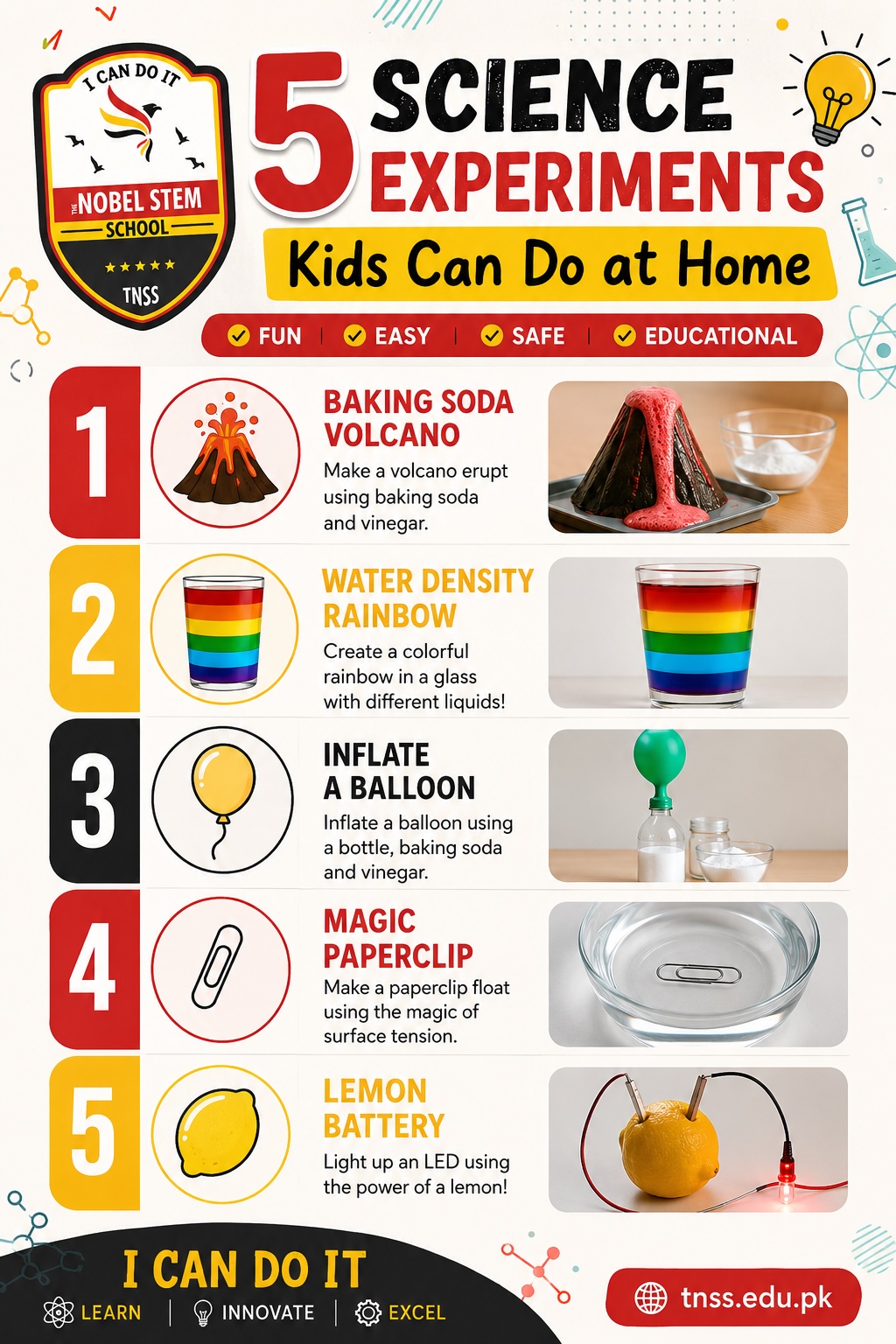
1. Baking Soda Volcano
The baking soda volcano is one of the most popular science experiments for children because it is simple, safe, and incredibly fun to watch.
What You Need:
- Baking soda
- Vinegar
- Dish soap
- Red food coloring
- A small bottle or cup
How to Do It:
Place the bottle in a tray or large bowl. Add a few spoons of baking soda into the bottle, then mix in some dish soap and red food coloring. Slowly pour vinegar into the bottle and watch the “lava” erupt.
What Kids Learn:
This experiment teaches children about chemical reactions. When baking soda and vinegar combine, they create carbon dioxide gas, causing the bubbling eruption.
Why It’s Great:
Kids love the exciting volcanic effect, and it helps them understand basic chemistry in a memorable way.
2. Water Density Rainbow
This colorful experiment is both beautiful and educational. It demonstrates how liquids with different densities behave.
What You Need:
- Clear glass
- Water
- Sugar
- Food coloring
How to Do It:
Prepare several cups of colored water with different amounts of sugar in each one. Carefully pour the liquids into a glass layer by layer.
What Kids Learn:
Children learn about density and how heavier liquids sink while lighter liquids float above them.
Why It’s Great:
This experiment combines science with creativity and creates a stunning rainbow effect that children enjoy making and sharing.
3. Inflate a Balloon Without Blowing
This activity surprises children because the balloon inflates without anyone blowing air into it.
What You Need:
- Balloon
- Empty bottle
- Baking soda
- Vinegar
- Funnel
How to Do It:
Pour vinegar into the bottle. Use a funnel to place baking soda inside the balloon. Carefully attach the balloon to the bottle opening and lift the balloon so the baking soda falls into the vinegar.
The balloon will start inflating automatically.
What Kids Learn:
This experiment demonstrates how gases form during chemical reactions.
Why It’s Great:
Children find it magical and exciting, making science feel fun instead of difficult.
4. Magic Floating Paperclip
This simple experiment introduces children to the concept of surface tension.
What You Need:
- Bowl of water
- Paperclip
- Tissue paper
How to Do It:
Place a small piece of tissue paper on the water surface and gently place the paperclip on top. Once the tissue sinks, the paperclip remains floating.
What Kids Learn:
Kids discover how water molecules stick together, creating surface tension strong enough to support lightweight objects.
Why It’s Great:
It encourages curiosity and helps children understand invisible scientific forces in everyday life.
5. Lemon Battery
Can a lemon produce electricity? Absolutely! This experiment introduces children to basic electrical science.
What You Need:
- Lemon
- Copper coin or strip
- Zinc nail
- Small LED light
How to Do It:
Insert the copper and zinc into the lemon and connect wires from the metals to the LED light.
What Kids Learn:
Children understand how simple batteries generate electricity through chemical reactions.
Why It’s Great:
This experiment makes electricity easier to understand and shows how science exists in everyday objects.
Why Science Activities Matter During Summer Vacations
Many students lose learning momentum during long vacations. Educational activities like science experiments help children stay mentally active while having fun.
Hands-on STEM activities improve:
- Critical thinking
- Creativity
- Observation skills
- Confidence
- Problem-solving abilities
They also reduce excessive screen time and encourage productive learning at home.
Parents can turn these experiments into family bonding activities by asking children questions, encouraging predictions, and discussing results together.
STEM Learning at Nobel STEM School
At Nobel STEM School, we are committed to preparing students for the future through innovative STEM education. We encourage curiosity, creativity, teamwork, and hands-on learning experiences that help students grow academically and personally.
Our learning philosophy goes beyond textbooks. We believe children learn best when they explore, experiment, and actively participate in the learning process.
The spirit of “I CAN DO IT” motivates our students to overcome challenges, think independently, and become confident learners.
Tips for Parents During Summer Learning
Here are a few simple ways parents can encourage learning during vacations:
Create a Daily Learning Routine
Set aside a small amount of time each day for educational activities.
Encourage Questions
Allow children to ask “why” and “how” questions during experiments.
Make Learning Fun
Use games, creativity, and hands-on activities instead of traditional studying.
Celebrate Curiosity
Praise children for trying new ideas and solving problems independently.
Final Thoughts
Science is everywhere, and summer vacations provide the perfect opportunity for children to discover it in exciting ways. These simple experiments help kids enjoy learning while building valuable STEM skills that can benefit them throughout their education and future careers.
Whether creating a volcano, building a lemon battery, or making rainbow water, children learn best when they actively explore the world around them.
At Nobel STEM School, we believe every child has the power to learn, innovate, and achieve greatness.
Because at Nobel STEM School:
“I CAN DO IT.”
Visit TNSS for more educational ideas, STEM activities, and learning resources.